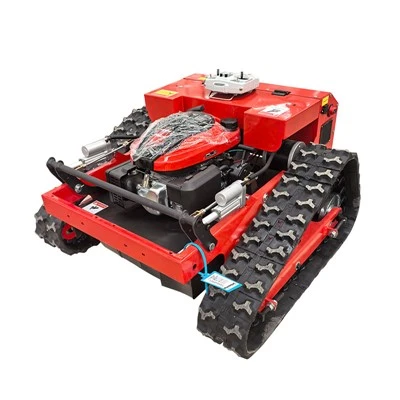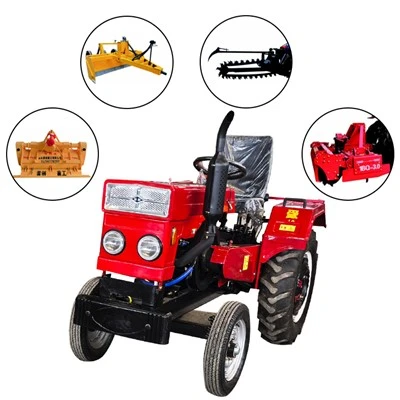
What is Hand Held Trenching Machine
A hand held trenching machine is a type of earth-moving equipment that uses a metal chain or a wheel with steel teeth to rip into the ground. Trenchers come in a variety of sizes and models for applications ranging from installing electrical cables and drainage to landscape projects around the house.
Benefits of Hand Held Trenching Machine
A hand held trenching machine is a type of excavation machine that is operated by a person walking behind it, hence the name. It's designed to dig trenches quickly and accurately, making it an excellent tool for a variety of projects, including installing drainage systems, laying pipes, and burying cables.
One of the biggest advantages of a hand held trenching machine is its versatility. It can dig trenches of varying depths and widths, and it can work on a variety of terrains, including rocky, sandy, or muddy soil. This makes it an excellent tool for both small and large projects, as it can easily maneuver in tight spaces and dig through tough terrain.
Another advantage of a hand held trenching machine is its speed. Compared to manual digging, which can take hours or even days depending on the depth and length of the trench, a hand held trenching machine can complete the job in a fraction of the time. This not only saves time but also reduces labor costs, making it a cost-effective solution for many projects.
When it comes to choosing the right hand held trenching machine for your project, there are a few factors to consider. One of the most important is the size of the trencher. The size you need will depend on the depth and width of the trenches you need to dig. For smaller projects, a compact hand held trenching machine may be sufficient, while larger projects may require a more powerful and robust machine.
Another factor to consider is the type of terrain you'll be working on. If you'll be working on rocky or uneven terrain, you may need a hand held trenching machine with larger wheels or tracks for better stability and traction.
-
![Agricultural handheld multifunctional chain trencher]() Agricultural handheld multifunctional chain trencherThe hand-held chain trencher is a small agricultural machinery, mainly used for trenching in farmland, orchards, etc. The working principle is to generate power through a diesel engine or a gasoline engine, transmit the rotation to theread more
Agricultural handheld multifunctional chain trencherThe hand-held chain trencher is a small agricultural machinery, mainly used for trenching in farmland, orchards, etc. The working principle is to generate power through a diesel engine or a gasoline engine, transmit the rotation to theread more -
![Agricultural Micro Trenching]() Agricultural Micro TrenchingHand-held chain trencher is a trenching machine used in earthwork construction. It is mainly used for trenching and land preparation in the fields of agriculture, construction and road construction. It usually has the characteristics ofread more
Agricultural Micro TrenchingHand-held chain trencher is a trenching machine used in earthwork construction. It is mainly used for trenching and land preparation in the fields of agriculture, construction and road construction. It usually has the characteristics ofread more -
![Small Chain Trencher For Household Use]() Small Chain Trencher For Household UseThe Small chain trencher for household use is a new type of efficient and practical chain trenching equipment, which is mainly composed of a power system, a reduction system, a chain transmission system, a soil distribution system, etc.read more
Small Chain Trencher For Household UseThe Small chain trencher for household use is a new type of efficient and practical chain trenching equipment, which is mainly composed of a power system, a reduction system, a chain transmission system, a soil distribution system, etc.read more -
![Small And Flexible Walk-Behind Trencher]() Small And Flexible Walk-Behind TrencherDear customers, the main function of this handheld chain trencher is to perform trenching, turning over land and agricultural farming. The equipment can be widely used in agriculture, gardening, municipal engineering and otherread more
Small And Flexible Walk-Behind TrencherDear customers, the main function of this handheld chain trencher is to perform trenching, turning over land and agricultural farming. The equipment can be widely used in agriculture, gardening, municipal engineering and otherread more -
![Farm Mini Hand-held Chain Ditcher]() Farm Mini Hand-held Chain DitcherFarm mini hand-held chain ditcher is an efficient trenching tool designed for small operations such as agriculture and gardening. It is usually used in the fields of ridge opening, ditch construction, drainage system construction,read more
Farm Mini Hand-held Chain DitcherFarm mini hand-held chain ditcher is an efficient trenching tool designed for small operations such as agriculture and gardening. It is usually used in the fields of ridge opening, ditch construction, drainage system construction,read more -
![Walk-behind Chain Trencher]() Walk-behind Chain TrencherWalk-behind Chain Trencher is a type of equipment used for trenching operations, usually in the fields of agriculture, gardening and construction. Its design makes it relatively simple to operate and suitable for working on narrow orread more
Walk-behind Chain TrencherWalk-behind Chain Trencher is a type of equipment used for trenching operations, usually in the fields of agriculture, gardening and construction. Its design makes it relatively simple to operate and suitable for working on narrow orread more -
![Small Walk-behind Chain Trencher]() Small Walk-behind Chain TrencherThe small walk-behind chain trencher is a new type of efficient and practical chain trenching device. It is mainly composed of a power system, a reduction system, a chain drive system and a soil distribution system. After the diesel engineread more
Small Walk-behind Chain TrencherThe small walk-behind chain trencher is a new type of efficient and practical chain trenching device. It is mainly composed of a power system, a reduction system, a chain drive system and a soil distribution system. After the diesel engineread more -
![Small Agricultural Chain Trencher]() Small Agricultural Chain TrencherThe small agricultural trencher is a small agricultural machinery equipment suitable for trenching and water diversion for irrigation. It is suitable for various scenes such as cultivated land, woodland, farms, etc. It has high trenchingread more
Small Agricultural Chain TrencherThe small agricultural trencher is a small agricultural machinery equipment suitable for trenching and water diversion for irrigation. It is suitable for various scenes such as cultivated land, woodland, farms, etc. It has high trenchingread more -
![Manual Chainsaw Handheld Trencher Ditcher]() Manual Chainsaw Handheld Trencher DitcherHand-held chain trencher is suitable for a variety of scenarios and caters to customer needs. The trenching depth is adjustable.The trenching depth can be adjusted from 50 to 100 cm.The handle is height-adjustable and supports 360°read more
Manual Chainsaw Handheld Trencher DitcherHand-held chain trencher is suitable for a variety of scenarios and caters to customer needs. The trenching depth is adjustable.The trenching depth can be adjusted from 50 to 100 cm.The handle is height-adjustable and supports 360°read more -
![Walk-behind Chain Trenching Machine]() Walk-behind Chain Trenching MachineThe walk-behind chain trenching machine is a highly efficient piece of agricultural trenching equipment, consisting of a diesel power system, a chain drive system, and a soil separation system. It features a chain scraper structure and isread more
Walk-behind Chain Trenching MachineThe walk-behind chain trenching machine is a highly efficient piece of agricultural trenching equipment, consisting of a diesel power system, a chain drive system, and a soil separation system. It features a chain scraper structure and isread more -
![Hand Pushed Farmland Trenching Machine]() Hand Pushed Farmland Trenching MachineThe hand pushed farmland trenching machine is a remarkable innovation that has transformed the way farmers prepare their fields. This compact and efficient tool is specifically designed to meet the unique demands of modern agriculture.read more
Hand Pushed Farmland Trenching MachineThe hand pushed farmland trenching machine is a remarkable innovation that has transformed the way farmers prepare their fields. This compact and efficient tool is specifically designed to meet the unique demands of modern agriculture.read more -
![Yam Slotting Machine]() Yam Slotting MachineThe yam slotting machine is a cutting-edge piece of equipment designed to revolutionize the way yams are processed. This advanced machine offers efficient and precise slotting capabilities, making it an indispensable tool in the yamread more
Yam Slotting MachineThe yam slotting machine is a cutting-edge piece of equipment designed to revolutionize the way yams are processed. This advanced machine offers efficient and precise slotting capabilities, making it an indispensable tool in the yamread more


Complete Product Range
Lime soil mixer, road cold recycling machine, grader, trencher, excavator, tracked transport vehicle, tracked trencher, rotary tiller, skid steer loader, roller, forklift, small excavator, loader, four-wheel tractor, drive rake, mixing tank, flipping plow, tree root powder crusher, lawn mower.
Quality Services
Our team is committed to delivering high-quality services to our clients. We use the latest technologies and tools to ensure that our services exceed your expectations.
Quality
We offer high quality services and products that are relatable and resonate with your business needs.
The Anatomy Of A Hand Held Trenching Machine: Components And Capabilities
Hand held trenching machines are necessary for many excavation projects in the construction industry as they can efficiently dig trenches for various purposes. To understand how they work, it is essential to break down the anatomy of a hand held trenching machine.
The blade of a hand held trenching machine sits at the front and is the primary component. Typically equipped with a chain, this is the part that breaks through the ground and creates the trench.
Its engine powers the hand held trenching machine's operations as it delivers the necessary output for all of these components. The engine provides the energy needed to drive the cutting mechanism and machine. This power output influences the hand held trenching machine's ability to handle various soil types and conditions, which factors into the machine's overall capability.
Along with the cutting mechanism and engine, there is a conveyor system that transports excavated material away from the trench. This system ensures a continuous workflow, preventing obstructions in the trenching process, and keeps the operator safe from any debris.
Hand held trenching machines are also equipped with tracks or wheels. When deciding between tracks or wheels, it is essential to consider the terrain and job site conditions. The choice between wheeled or tracked hand held trenching machines affects mobility and stability. Wheeled models should be used when the surface is mostly hard while tracked hand held trenching machines can be used on softer terrain.
How To Use A Hand Held Trenching Machine
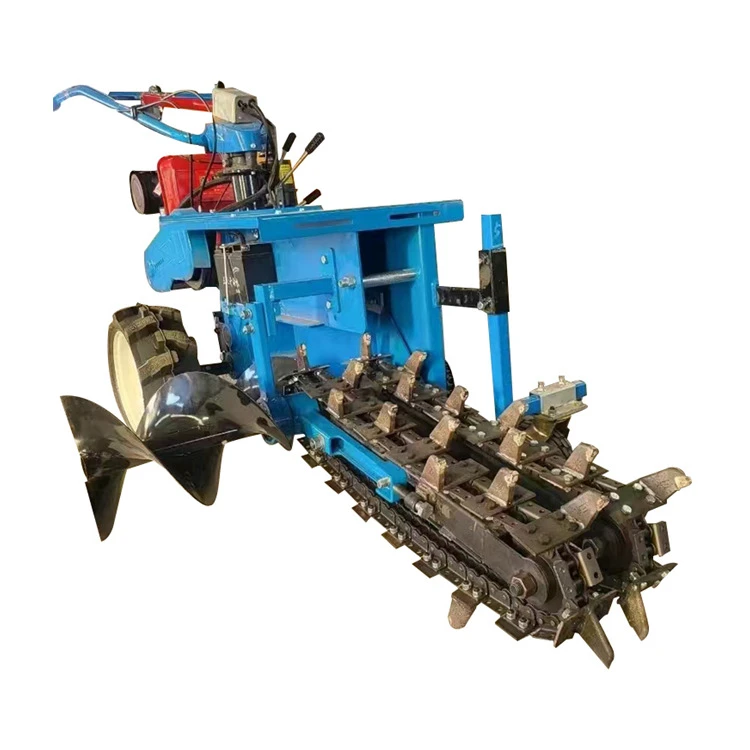
How to use a hand held trenching machine: The basics
Every trencher model is different. Read the operator's manual to learn how to use your specific trencher model. The main steps are outlined in broad strokes below. Don't forget to wear ppe. You'll want work boots, safety glasses, gloves and a hard hat.
Inspect the machine. Make sure the guards and shields are in place, the chain is tight and the teeth are in good condition. Check the fluids, too.
Clear the path. You'll be walking backwards when you operate the trencher and won't be able to see what's behind you, so this step is important. You don't want to trip on a garden hose, tool or child's toy. Running over obstacles could also damage the machine, as well as whatever object you run over. Remember to remove any landscaping fabric. Keep other people away from the immediate area.
Move the machine to the trench starting point. Start the machine by following the instructions in the manual. Set the drive position to forward, then move the trencher where you want it.
Change the drive position to reverse. Although machine is called a hand held trenching machine, it's designed to dig earth with you pulling the machine toward you as you walk backwards. Think of it as the opposite of pushing a lawn mower.
Set the chain depth. Set the chain to the depth you want, then lower it to just above the ground. Activate the chain and lower it into the earth. Change the depth if necessary, then throttle up.
Walk backwards, pulling the trencher toward you. Keep both hands on the handles, and maintain situational awareness.
Tips for using a hand held trenching machine
Got the basics figured out? Here are a few more points to consider as you continue learning how to use a hand held trenching machine:
Choose the right size machine for the job. Hand held trenching machines are more compact and maneuverable than ride-on trenchers, but if you're renting a hand held trenching machine, you'll still want to determine what size and horsepower you need for the trench you're digging. A wider, deeper trench will require a larger machine.
Choose the right chain teeth and attachments. Rocky ground presents challenges. In cases of extremely rocky earth or sediment, using a trencher with the wrong teeth or attachments can damage the machine or get it stuck. Know the ground you're digging in. If you're not sure what teeth or attachments you need, ask your rental equipment provider.
If you get stuck in hard or muddy earth, reverse the chain or wheel. Follow the procedure recommended in the manual. Switching between forward and reverse, as you would with a car stuck in the mud, can often dislodge the attachment.
Soften hard earth. If the ground is giving you trouble as you attempt to dig, moisten the earth with a hose to make it easier for trencher to cut through.
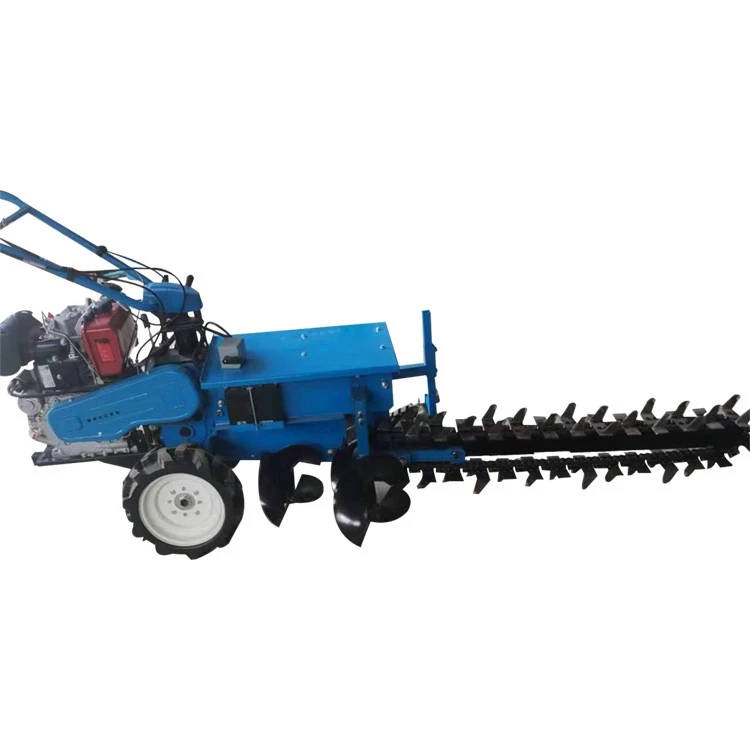
Hand Held Trenching Machine Maintenance: Trencher Teeth, Chains, Tires and More
Adopt Basic Maintenance Best Practices
Inspect the hand held trenching machine before each use. Look for signs of wear and tear. Frequent inspections will help you spot hand held trenching machine problems early.
Keep up with preventive maintenance tasks. Most manufacturers specify preventive maintenance, including engine oil and filter inspections and changes, at 10, 50, 100, 250 and 500 hours of operation. Follow the schedule in the owner's manual.
Check and change the oil regularly. Some hand held trenching machines require an oil change after 10, 20 and 100 hours of use. The user's manual will spell out the intervals. Use oils and coolants recommended by the manufacturer and maintain recommended levels.
Lubricate if needed. If the machine requires it, lube necessary parts with a small amount of multipurpose grease after each use. Depending on your hand held trenching machine, that may include the pivot head shaft bearing, the pivot bushing, the auger bearing, wheel tracks and tail roller. Manufacturers are increasingly using sealed bearings on pivot points to reduce lubrication needs.
Clean the hand held trenching machine, including the chain, often. Some dense soils, such as clay soil, are relatively easy to remove when moist but become cement-like when given time to dry.
Check the air filter regularly. When working in dusty conditions, check it daily.
Inspect the hand held trenching machine chain, teeth and sprockets
The digging chain, digging teeth and sprockets of the hand held trenching machine are the primary wear parts, and they require regular inspection. Visually inspect all three after each job or roughly 10 hours of operation.
Follow the manufacturer's specifications for matching the digging teeth, sprockets and digging chain to the digging conditions. If you're working in rocky or sandy soil, you'll need to replace the teeth, chain and sprockets more often.
Hand Held Trenching Machine Chain
Follow the manufacturer's recommendation on chain tension and check the chain tension before and after each use. As a general rule, you should be able to fit two fingers between the chain and the lowest part of the boom when the boom is parallel to the ground. A chain that's too tight causes premature wear on the rollers, boom and sprockets. A loose chain can cause the equipment to vibrate, and it may hit the boom and eventually bind the tail roller.
Also inspect the chain for wear. A worn digging chain can jump off the sprockets or end roller and damage other parts of the digging system.
Hand Held Trenching Machine Teeth
One of the most common hand held trenching machine maintenance mistakes is not replacing digging teeth often enough. Digging teeth should be sharp. Worn teeth force the hand held trenching machine to work harder because they create higher shock loads on the chain and boom.
Check that the face of each cutting edge is intact. Broken teeth should be replaced right away.
Different types of teeth work best in specific situations. Cup teeth work well in soft, medium or sticky soils. Tougher teeth with carbide bits work better in rocky soil or frozen ground. Choosing the right teeth for the soil reduces stress on the hand held trenching machine.
Hand Held Trenching Machine Sprockets
When you find worn sprockets, replace them and the chain at the same time to maintain the system tolerance and increase the life of the machine. If you replace one and not the other, the newer component will be impacted by the worn one and degrade faster.
Inspect the hand held trenching machine tires, fluids and gauges
The tires, fluids and gauges of a hand held trenching machine are often overlooked, but they are critical to ensuring good performance.
Hand Held Trenching Machine Tires
Check the tire pressure. You'll also want to tighten the tire mounting bolts to the manufacturer's specifications since the stress of digging loosens them.
Hand held trenching machine fluids
Check the levels of hydraulic fluids, engine oils and coolants, and look for leaks while you're at it.
Eyeball the hydraulic hoses for weathering, damage or bulges that can lead to bursting under pressure.
Hand Held Trenching Machine Gauges
Start the engine and check each gauge. All temperatures and pressures should rise to levels specified in the user's manual and remain there. If you get any abnormal readings, shut down the hand held trenching machine and remove the machine from service until the problem has been fixed.
Our Certificate
3C certification, gold certification, CE certification

Company Profile
The company is located in Jining, Shandong, known as the hometown of Confucius and Mencius and the land of etiquette. It is a group enterprise that integrates scientific research and development, processing and manufacturing, and trade services. It includes multiple departments such as the technology center, domestic trade department, international trade department, production department, quality inspection department, logistics department, and after-sales department, working together as a team. After years of hard work and innovation, we have become a professional mechanical manufacturer that specializes in scale, complete sets, technology, and energy conservation.


Asked Questions
As one of the leading hand held trenching machine manufacturers in China, we warmly welcome you to buy discount hand held trenching machine in stock here from our factory. All customized products are with high quality and low price.
Yam Slotting Machine, Cable Trencher-
![Three Point Suspension Track Bulldozer]() Three Point Suspension Track BulldozerThe three-point suspension track bulldozer has strong applicability: it is suitable for operation in various mountains,read more
Three Point Suspension Track BulldozerThe three-point suspension track bulldozer has strong applicability: it is suitable for operation in various mountains,read more -
![Rice Field Track Pulping Machine]() Rice Field Track Pulping MachineThe paddy track beater is a remote-controlled device that combines electronic integrated control system and hydraulicread more
Rice Field Track Pulping MachineThe paddy track beater is a remote-controlled device that combines electronic integrated control system and hydraulicread more -
![Crawler Straw Returning Machine]() Crawler Straw Returning MachineThe tracked straw returning machine is suitable for various mountainous areas, hills, plains, dry fields, greenhouses,read more
Crawler Straw Returning MachineThe tracked straw returning machine is suitable for various mountainous areas, hills, plains, dry fields, greenhouses,read more -
![25 Horsepower Track Ridge Laminating Machine]() 25 Horsepower Track Ridge Laminating MachineThe 25 horsepower track ridge laminating machine adopts high horsepower power machinery and deep rotary tillage effect,read more
25 Horsepower Track Ridge Laminating MachineThe 25 horsepower track ridge laminating machine adopts high horsepower power machinery and deep rotary tillage effect,read more -
![Remote Control Robot Lawn Mower]() Remote Control Robot Lawn Mowerwhat is Robot Lawn Mower The remote control lawn mower is an intelligent device that simplifies garden maintenance byread more
Remote Control Robot Lawn Mowerwhat is Robot Lawn Mower The remote control lawn mower is an intelligent device that simplifies garden maintenance byread more -
![Four-wheel Tractor With Multiple Uses]() Four-wheel Tractor With Multiple UsesIntroduction: Equipment used for field operations, belonging to the category of tractors. That is, tractors with wheelsread more
Four-wheel Tractor With Multiple UsesIntroduction: Equipment used for field operations, belonging to the category of tractors. That is, tractors with wheelsread more